Quick answer
- Most babies are ready for solids at around 6 months, and not before 4 months.
- Start with iron-rich foods like iron-fortified cereal, pureed meat or mashed beans.
- Introduce common allergens, including peanut and egg, early and regularly; ask your pediatrician first if your baby has severe eczema or a known allergy.
- No honey before age 1, and no cow’s milk as a main drink before 12 months.
- Breast milk or formula stays the main source of nutrition for the first year.
When to start solids
The American Academy of Pediatrics recommends starting solid foods at about 6 months. Age matters, but readiness matters more.
Signs your baby is ready
- Holds their head steady and sits upright with support
- Opens their mouth when food comes near and shows interest in what you eat
- Can move food to the back of the mouth and swallow instead of pushing it out with the tongue
- Has roughly doubled their birth weight
Best first foods
There’s no required order, but iron and zinc become more important around 6 months, so lead with foods that provide them.
| Food group | Easy first options |
|---|---|
| Iron-rich | Iron-fortified infant cereal, pureed meat or poultry, mashed beans or lentils |
| Vegetables | Pureed or soft-cooked sweet potato, squash, peas, carrots |
| Fruit | Mashed banana or avocado, applesauce, pureed pears |
| Allergens | Thinned peanut butter, well-cooked egg, plain yogurt |
How to introduce new foods
- Start with 1–2 teaspoons once a day, and increase as your baby shows interest.
- Offer one new single-ingredient food at a time and wait a few days before the next, so you can spot reactions.
- Progress from smooth purees to mashed, then soft finger foods as your baby develops.
- Let your baby explore. Mess is part of learning.
- Offer small sips of water in an open or straw cup with meals.
Introducing allergens
Introducing common allergens early, and keeping them in the diet, can lower the chance of food allergies. U.S. guidelines support early peanut introduction. Common allergens include peanut, egg, cow’s milk (in foods like yogurt), tree nuts, wheat, soy, fish, shellfish and sesame.
Talk to your pediatrician first if your baby has severe eczema, an egg allergy, or has reacted to a food before. They may recommend testing or introducing peanut under supervision.
Never give whole peanuts or spoonfuls of thick peanut butter. Thin peanut butter with water, breast milk or formula, or mix peanut powder into food.
Foods to avoid in the first year
- Honey (including baked in foods), because of the risk of infant botulism
- Cow’s milk as a drink before 12 months (small amounts in foods are fine)
- Juice, which adds sugar without much nutrition
- Added salt and sugar
- Choking hazards: whole nuts, whole grapes, popcorn, hard raw vegetables, chunks of meat or cheese, hot dog rounds and hard candy
Gagging vs. choking
Gagging is normal and noisy; it’s how babies learn to move food safely. Choking is silent or near-silent, and your baby can’t cough or cry. Always supervise meals, keep your baby seated upright, and consider taking an infant CPR class.
Starting solids checklist
- Baby shows signs of readiness and your pediatrician has given the go-ahead
- High chair with a footrest and harness
- Soft-tipped baby spoons
- Bibs (silicone bibs with a pocket save laundry)
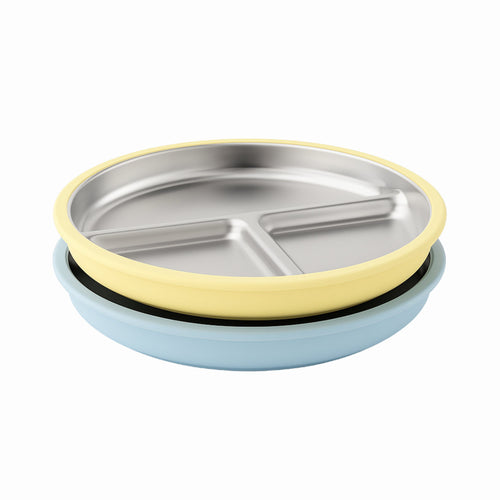
- Suction bowls and plates
- Open cup or straw cup for small sips of water
- Iron-rich first foods ready to go
- Plan for introducing peanut and egg
- Floor mat or splat mat
- Infant CPR class booked
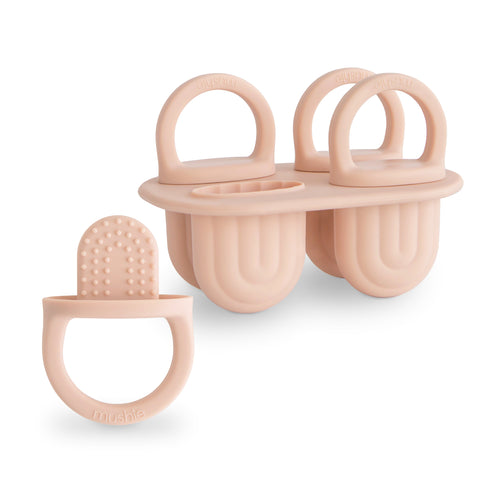
Find spoons, bowls, cups and bibs in our mealtime collection.
Frequently asked questions
When should my baby start solids?
Around 6 months for most babies, when they show signs of readiness. Don’t start before 4 months.
What should be my baby’s first food?
Iron-rich foods are a great start, such as iron-fortified cereal, pureed meat, or mashed beans. Vegetables and fruits are good choices too.
How much formula does my baby need after starting solids?
Breast milk or formula remains the main source of nutrition until 12 months. Amounts may level off as solids increase. See our formula chart.
When can babies have peanut butter?
Many babies can have thinned peanut butter or peanut powder once they start solids. If your baby has severe eczema or an egg allergy, talk to your pediatrician first.
Can babies drink water?
Small sips of water with meals are fine once your baby starts solids at around 6 months.